Ramona
CLIMBING ROSES
This climbing rose is a true highlight for a romantic garden. Its large, double flowers are painted in an elegant greenish-white shade with ivory undertones, while the base of the petals shows a delicate green hue.
Shrub
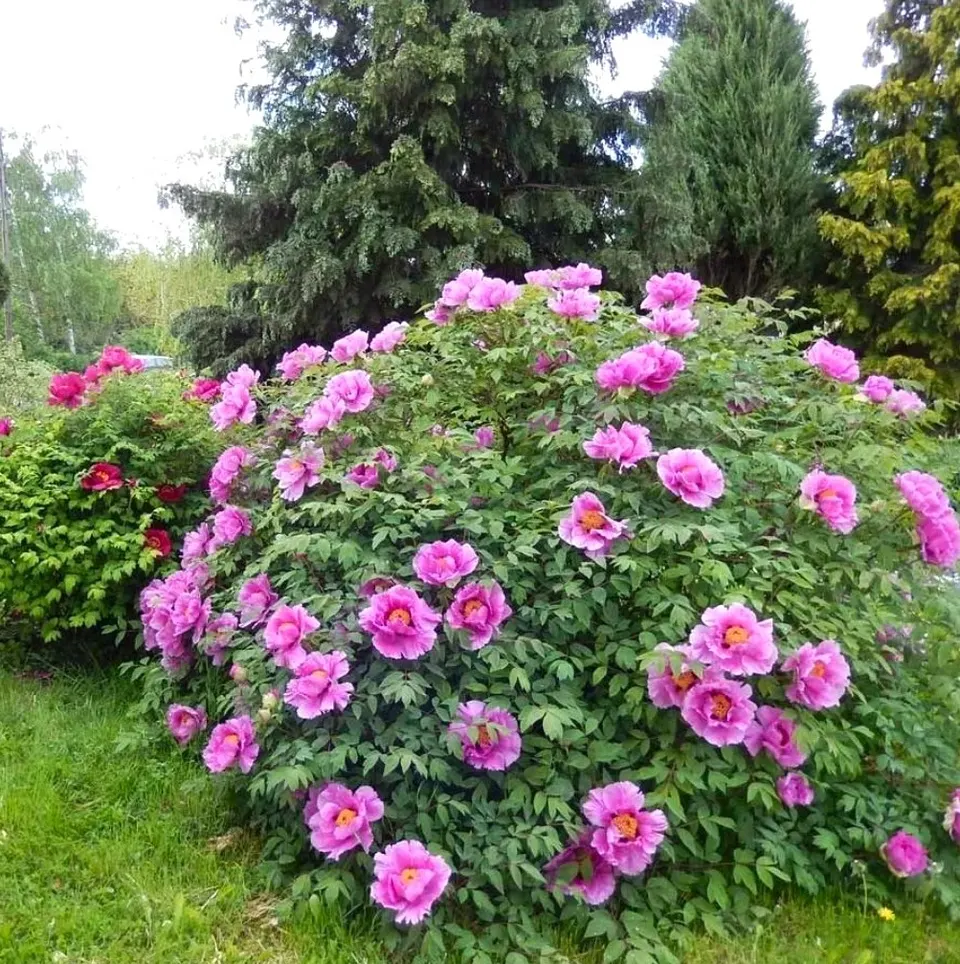
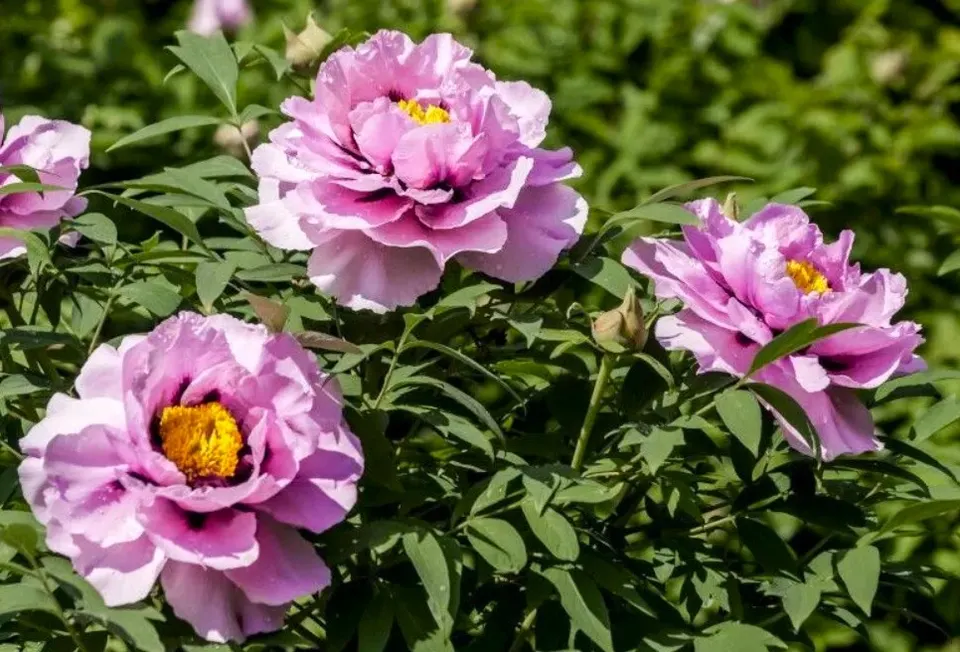
Tree peonies are real garden treasures. Their large, luxurious flowers and graceful bushes add elegance and harmony to the garden. These plants become the central accents in landscape compositions, bringing an atmosphere of nobility and comfort.
Features of tree peonies
Bush height: up to 2 mFlowers: large (up to 20 cm), simpleColour: from white and pale pink to rich burgundy and purple shadesAbundant and long-lasting floweringFoliage: dark green, decorative, lasts until late autumnAroma: subtle, nobleFrost resistance: high (up to -25 °C)Minimal care requirements
In landscape design, tree peonies create spectacular compositions:
In single plantings (solitary) — they become the main accent of the flower garden.
In groups — different shades of flowers create picturesque and voluminous compositions.
With other plants:
lavender and sage add sophistication, irises and lilies add verticality, coniferous shrubs create an expressive background.
Peonies can be planted along paths, fences, or as part of a hedge — their flowering bushes transform the area into a luxurious garden.
Lighting:
Choose a sunny spot protected from drafts. In light partial shade, the bush develops more slowly and blooms less profusely.
Soil:
Fertile, loose, and well-drained, with a neutral or slightly acidic reaction (pH 6.5−7.0). It is important to ensure drainage — add a layer of gravel or coarse sand to the planting hole. Avoid areas where meltwater or rainwater stagnates.
Watering:
Water moderately but deeply. In the Baltic States, the soil often retains moisture longer, so watering is required approximately every 10−14 days, depending on the weather.
Fertilizing:
In spring, apply organic fertilizers.
During budding and flowering, add phosphorus and potassium fertilizers to support abundant flowering.
In autumn, apply ash or potassium preparations to prepare for winter.
In spring, carry out sanitary pruning.
After the snow melts, remove all frozen and dry shoots. This stimulates the growth of new branches and improves the shape of the bush.
In autumn, mulch the root zone.
Use peat, or dry leaves. Mulch helps protect the roots from freezing and evens out soil moisture during frequent autumn rains.
Insulate young plants for the winter.
In the first 2-3 years after planting, cover the bush with spruce branches or non-woven material (agrofibre). This is especially important in winters with little snow, when temperatures can drop below -20 °C.
In spring, remove the cover gradually.
Do this in cloudy weather to avoid sunburn on young shoots.
Do not transplant unnecessarily.
Tree peonies do not tolerate transplanting well, especially in cool and humid climates. It is better to choose a permanent sunny location with good drainage right away.
In spring, gently loosen the soil.
After the snow melts, the soil in the Baltic States often becomes compacted. Careful loosening helps air penetrate the roots, prevents moisture stagnation and the development of fungi.
Remove faded buds.
After flowering, cut off wilted flowers — this prolongs the decorative effect of the bush and prevents the plant from weakening.
Mulch the base of the bush.
Use compost or bark — this helps retain moisture in summer and protects the roots from freezing in winter.
Cover young plants.
In the first 2−3 years after planting, it is recommended to insulate tree peonies for the winter with spruce branches or breathable agrotextile. Mature bushes can overwinter without shelter, but in winters with little snow, it is advisable to protect the base from freezing.
Inspect the bush regularly.
In the changeable Baltic climate, it is important to watch for mold or rot. At the first signs, remove the affected parts and treat with a fungicide.

CLIMBING ROSES
This climbing rose is a true highlight for a romantic garden. Its large, double flowers are painted in an elegant greenish-white shade with ivory undertones, while the base of the petals shows a delicate green hue.
HYBRID TEA ROSE
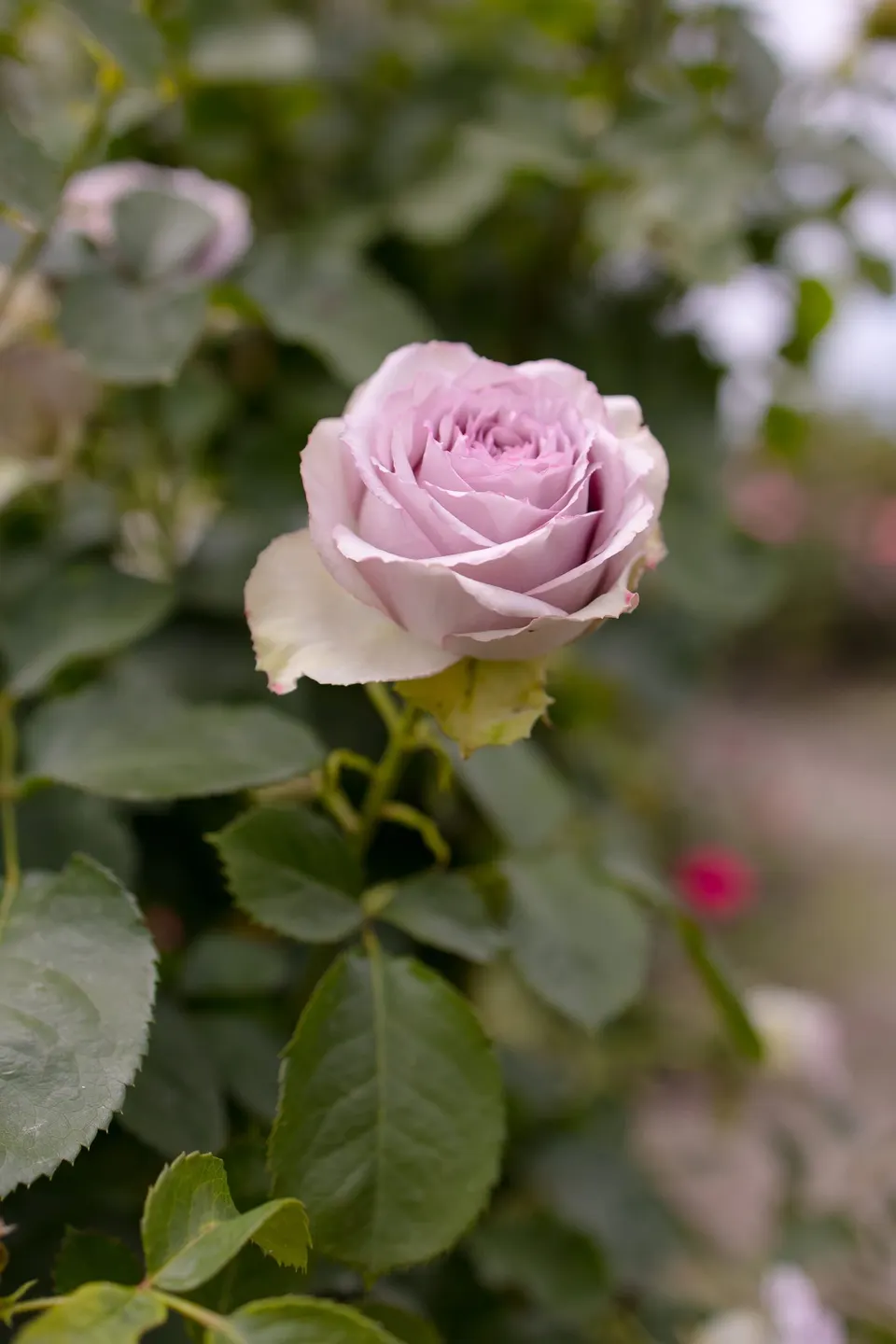
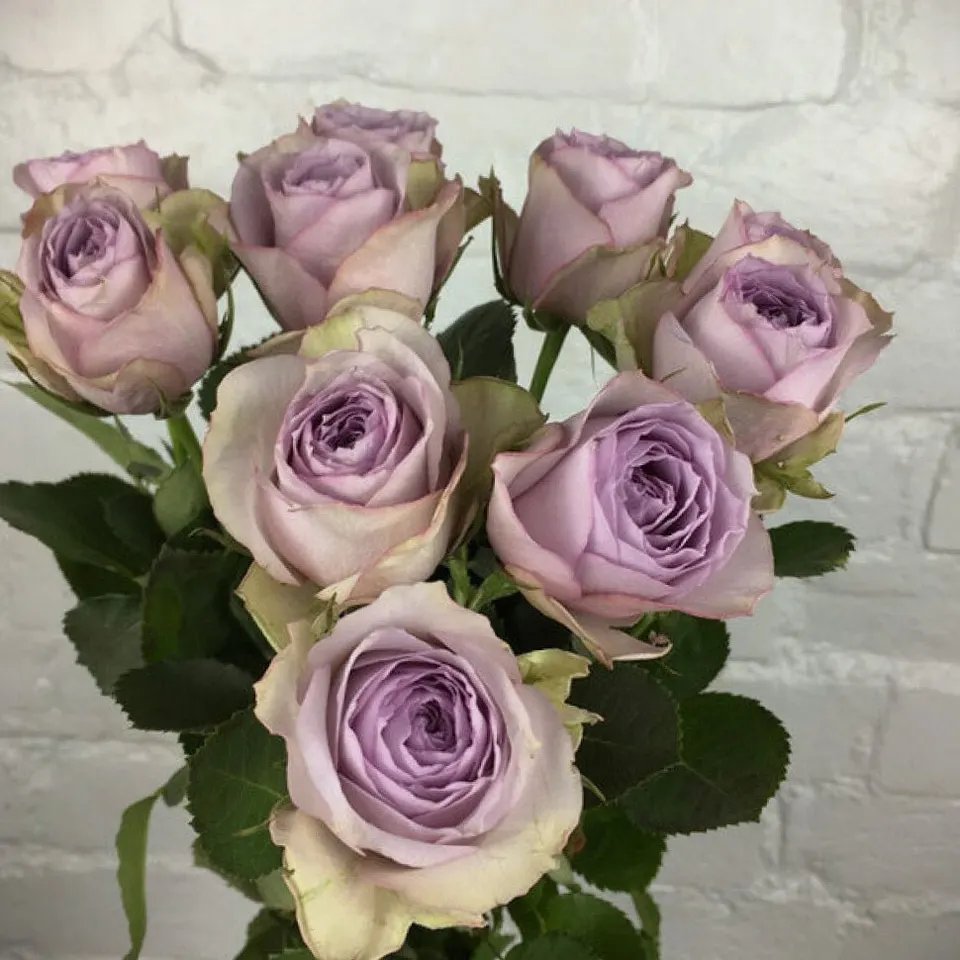
This rose is a true work of nature, with unique colouring that changes its shades depending on the flowering period and weather conditions. The Purple-lilac petals can turn into deep mauve-purple or soft lilac-lavender shades, which makes the flower particularly expressive and unique.
PARK ROSE, SHRUB
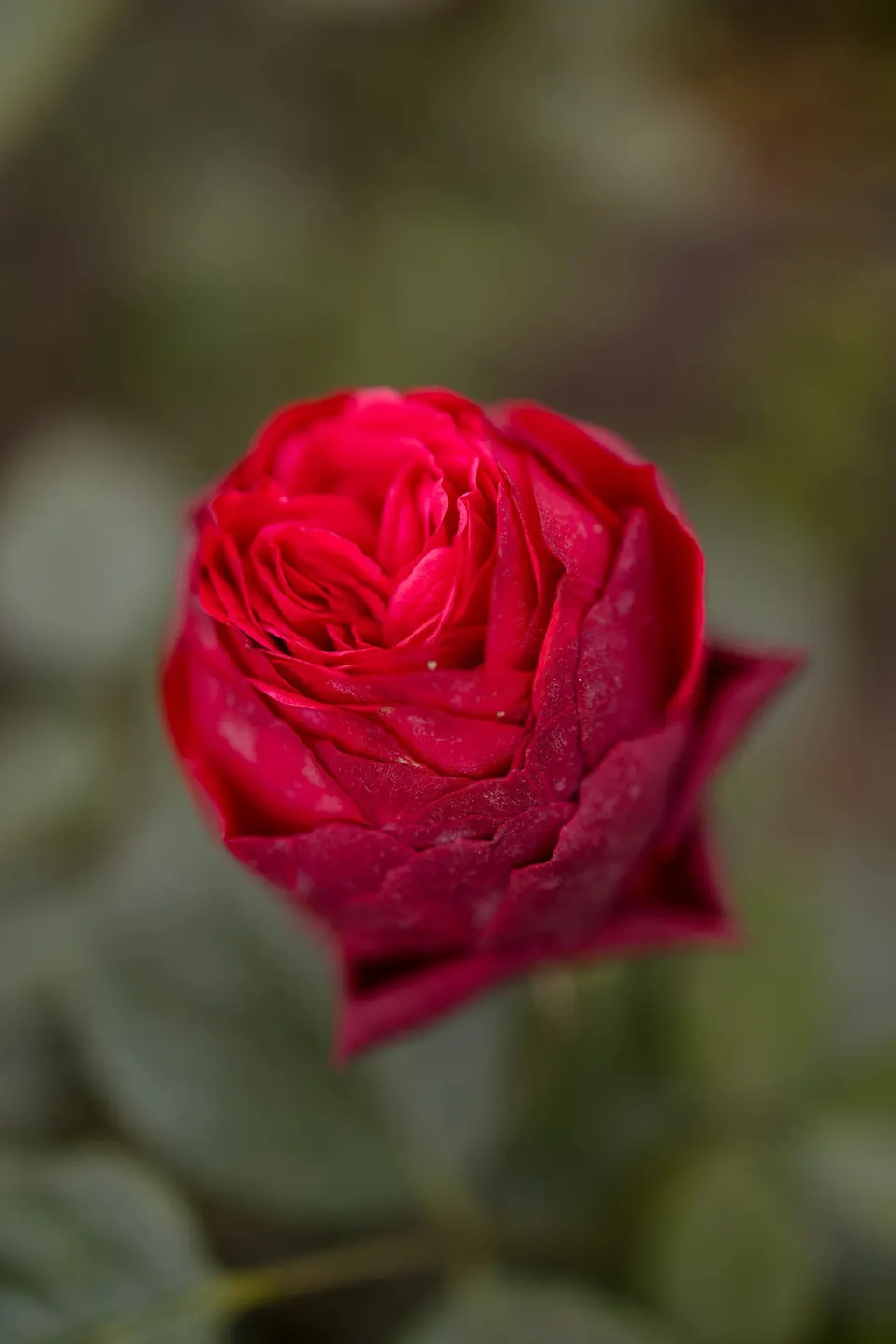
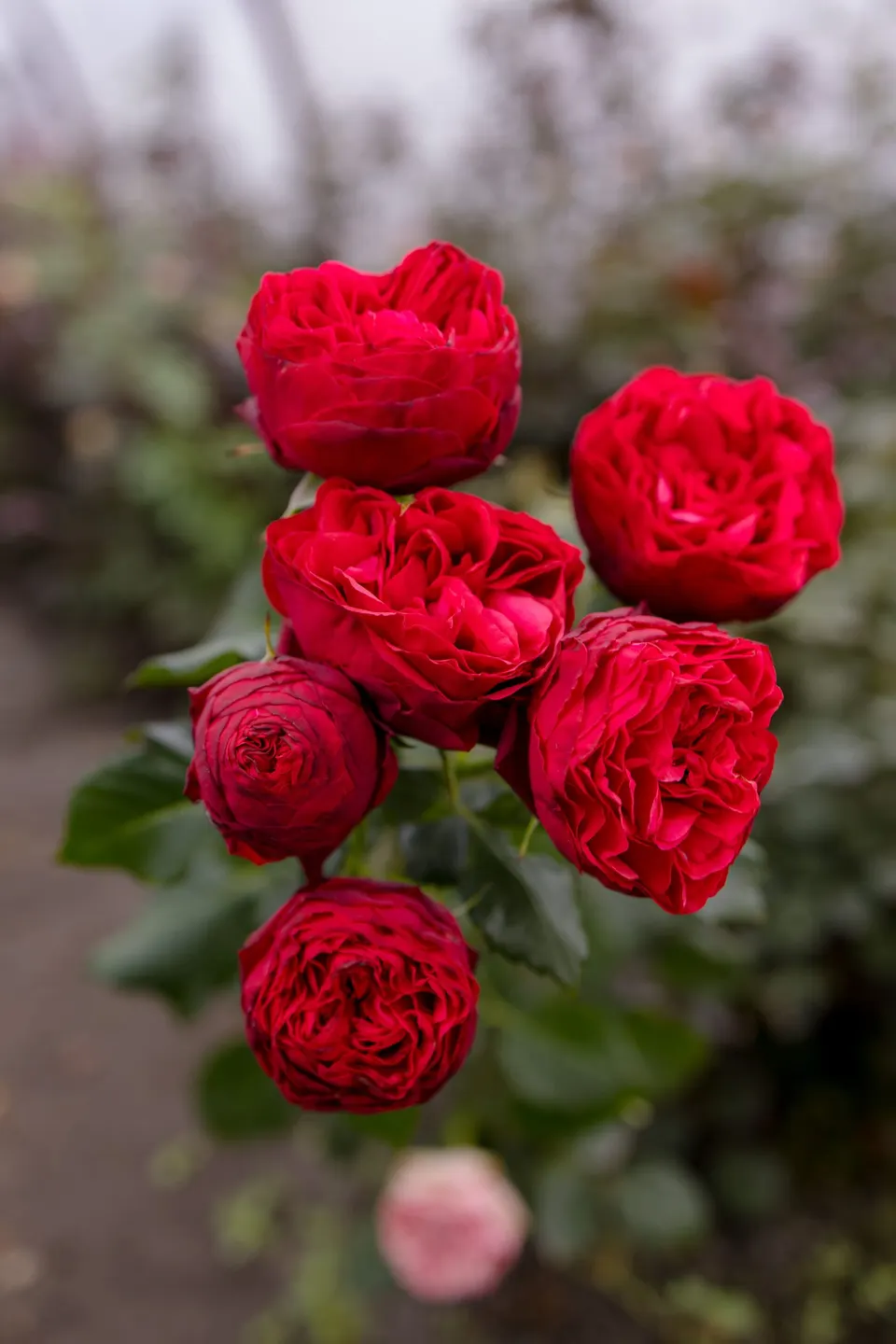
An enchanting rose with delicate, romantic blooms and the nostalgic fragrance of old garden roses. Its densely petaled, peony-shaped flowers fully open into a cupped form with a quartered center, composed of numerous elegant petals.